
4 Note-Taking Rhythms That Brought My Digital Garden Back to Life

I used to think my problem was organization.
If I could just sort my notes better…
tag them more consistently…
find the right system…
Then everything would finally click.
But the longer I’ve been doing this—thinking, writing, saving things—the more I’ve realized: my problem was never where my ideas lived.
It was that I didn’t spend enough time with them.
I was collecting ideas the way people collect rocks on a walk. Pick it up. Admire it. Put it in a pocket. Keep moving.
What I actually needed was to sit down and stay for a while.
Here are four things I’m learning as I’ve slowed down and started treating my notes more like a garden than a filing cabinet.
1. A Digital Garden Isn’t for Storage. It’s for Conversation.
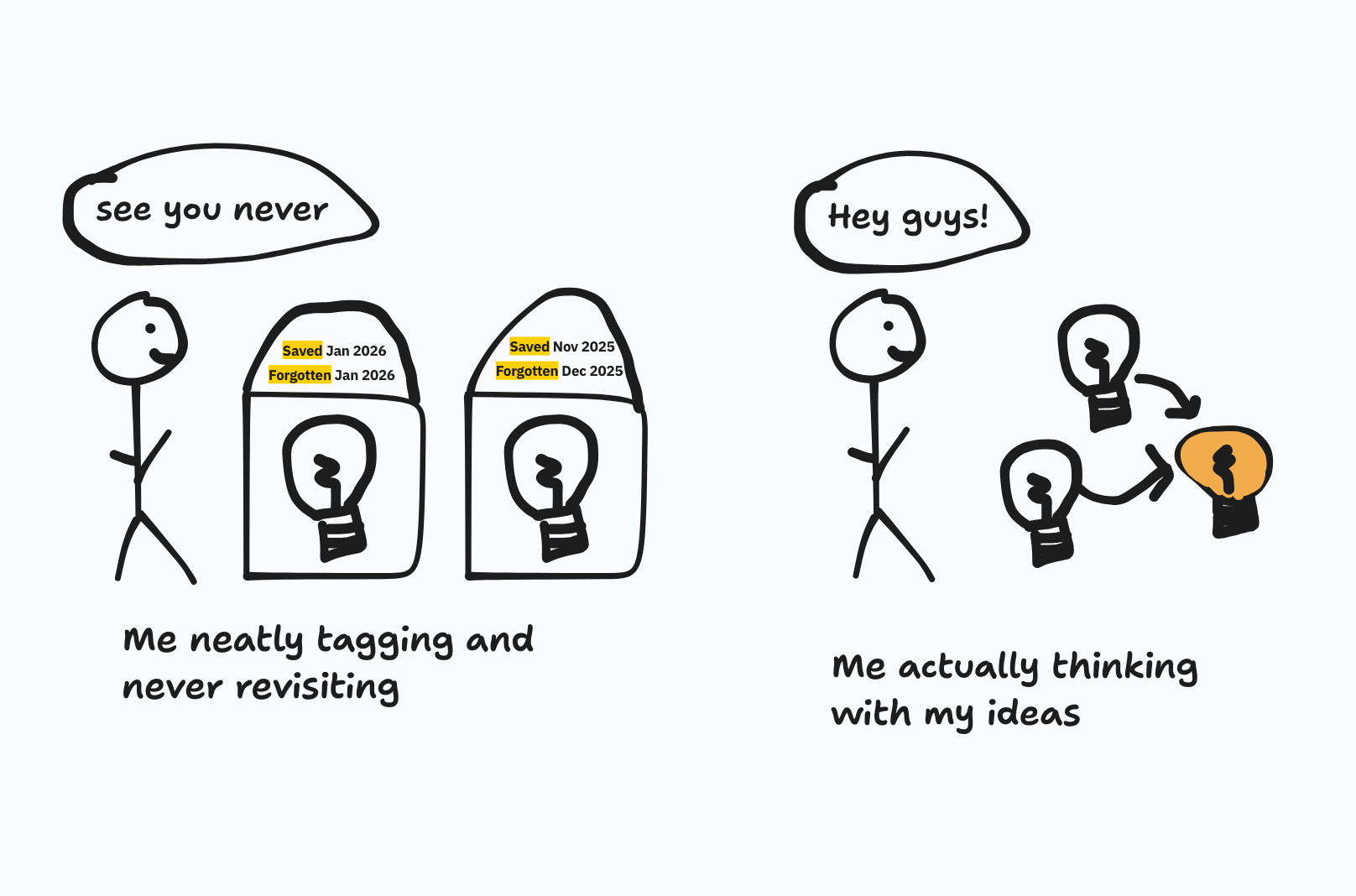
For a long time, my notes were quiet.
Not because they weren’t meaningful—
but because I never talked back to them.
I’d save a quote, feel good about it, and move on.
No response. No reaction. No questions.
At some point, I realized: ideas don’t shape you until you engage them.
The moment I started adding my own thoughts—even just a sentence or two—everything changed.
It stopped being someone else’s insight and started becoming mine.
A digital garden isn’t a place where ideas go to sit politely.
It’s a place where they get answered.
2. I Don’t “Find” Connections When I Rush. They Show Up When I Slow Down.
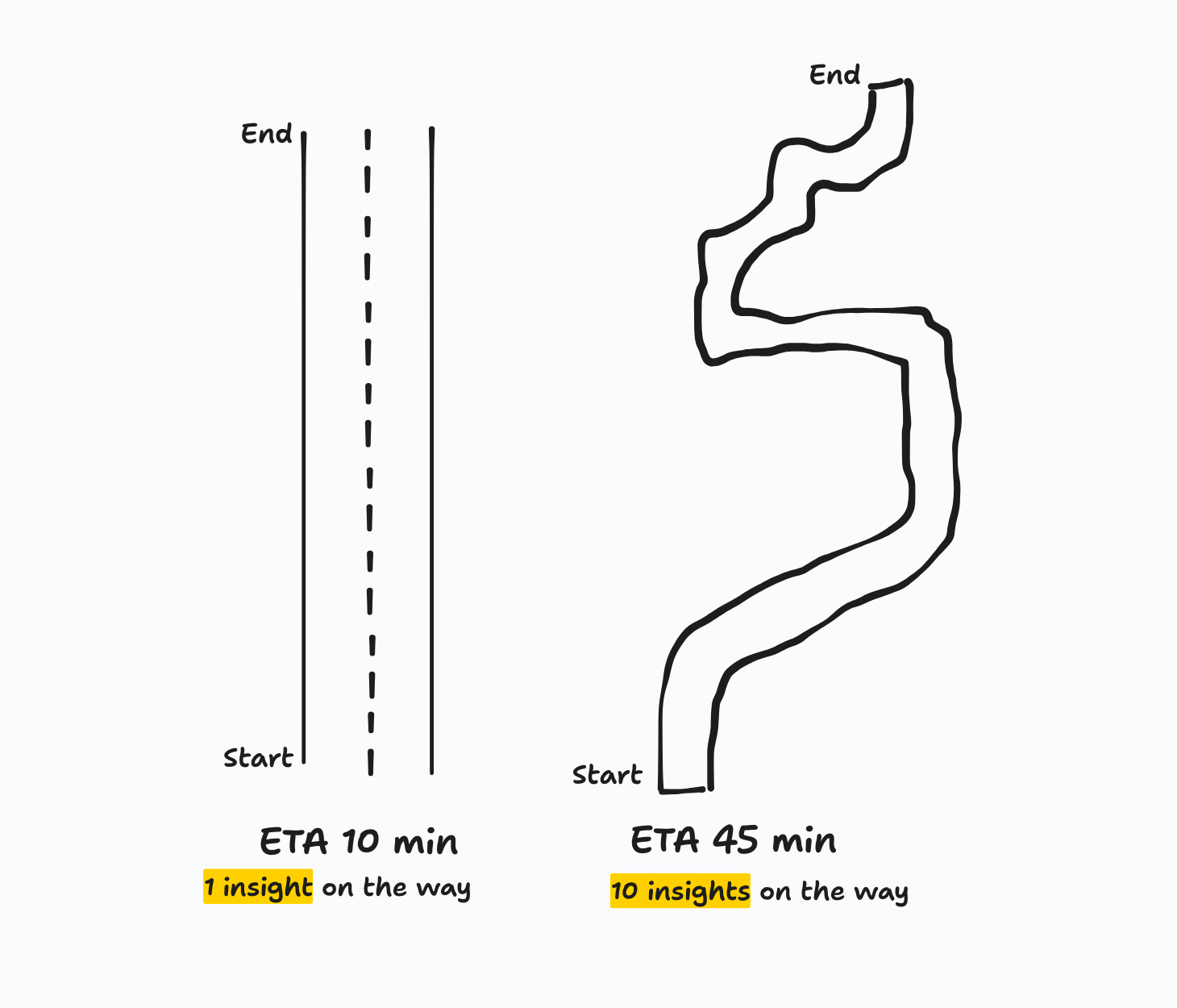
I used to try to force connections.
I’d save something and immediately ask, How does this fit?
What does this relate to?
Where does this belong?
But that never worked very well.
Connections don’t like being interrogated.
They show up when you’re present long enough for your mind to wander a little. When you reread the same sentence. When you sit in the quiet after the quote instead of clicking away.
Some of my best connections have shown up when I wasn’t trying to be productive at all—just paying attention.
Turns out, your brain knows how to connect things.
You just have to give it time.
3. One Idea Turns Into Many When You Actually Stay With It
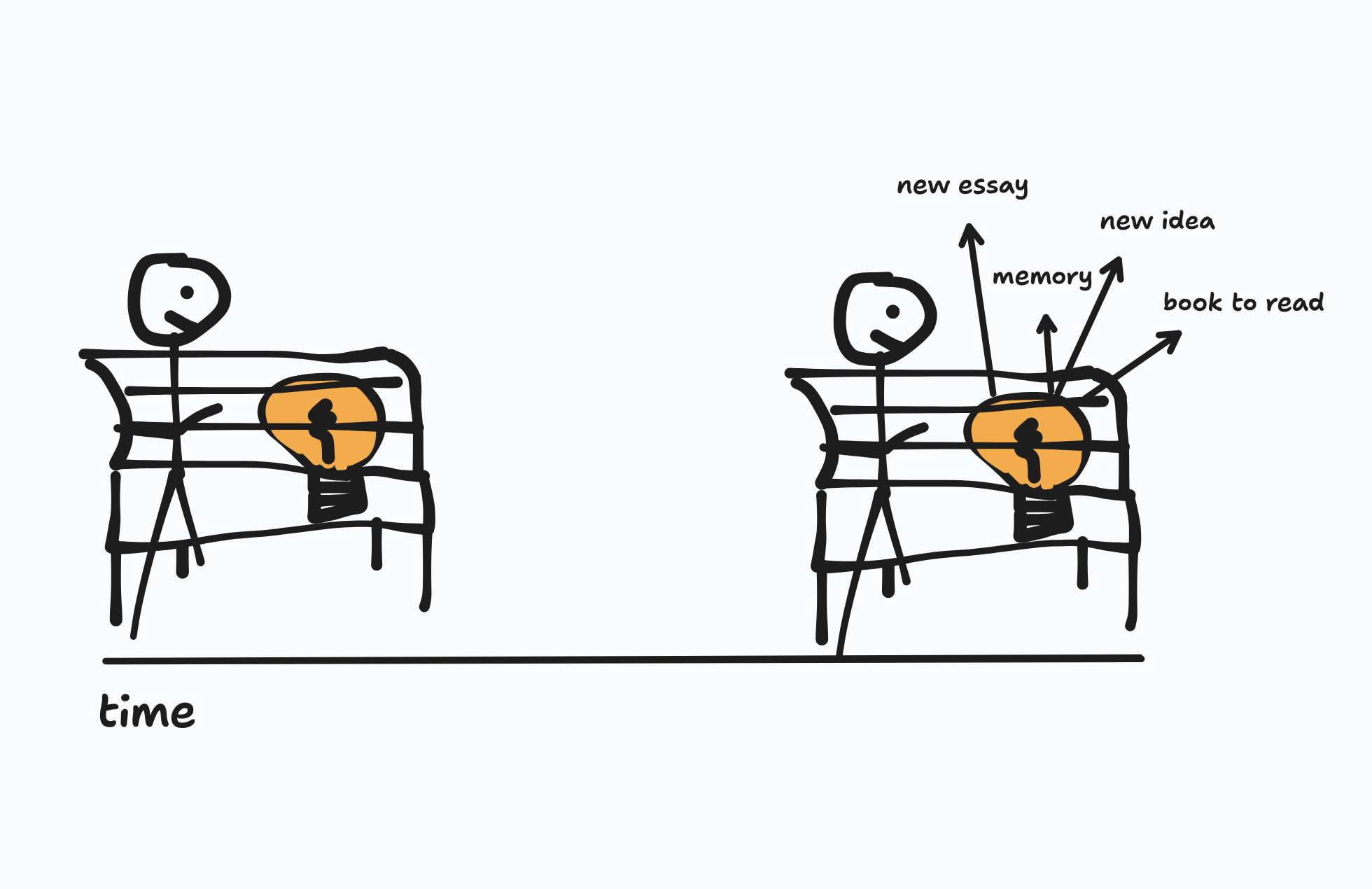
I really thought depth came from more inputs.
More reading.
More quotes.
More open tabs than I care to admit.
But what actually changed things was doing less—and staying longer.
Lately, I’ve been trying to sit with one idea at a time. No pressure to do anything with it. No need to turn it into content. Just staying.
That’s honestly why I made Ember.
Not because I wanted another tool, but because I needed something that would gently keep me from moving on too fast. Something that would say, “What if you stayed here for a minute?”
So I’ll open it, read the idea, and just hang out with it.
And after a bit, something usually happens.
It reminds me of an old note I forgot about.
A phrase I wrote months ago suddenly makes sense.
I hear myself say, “Oh… that’s what that was pointing to.”
I’m not chasing connections. They just show up.
One idea is rarely just one idea—if you don’t rush past it.
4. Old Notes Come Back When You Tend the Same Ground
One of the quiet joys of thinking this way is watching old notes resurface.
Not because I searched for them—but because the soil was being disturbed again.
When I sit with an idea, add a thought, follow a small trail, things I wrote months or even years ago start popping back up. It’s like they’ve been waiting for me to return.
I didn’t lose those ideas.
I just stopped visiting them.
A good note system doesn’t just store your thoughts.
It helps you run into them again.
Gardens don’t grow because they’re efficient.
They grow because someone keeps showing up.
Sit with one idea this week.
Add a sentence instead of a tag.
Ask a question instead of filing it away.
P.S. If this way of thinking resonates—lingering, noticing, letting tension do its work—that’s exactly why I built Ember. It’s a quiet space to sit with one idea at a time instead of rushing past it. No feeds. No pressure. Just room to think.
If you’re curious, you’re welcome to try it.
Love it