
Why Austin Kleon Saves Ideas This Way (The Power of a Commonplace Book)
How his daily quote routine is reshaping the way I take notes.

The Quote Basket That Started It All
Lately I’ve been thinking a lot about quotes—specifically, how we collect the sentences that shape us.
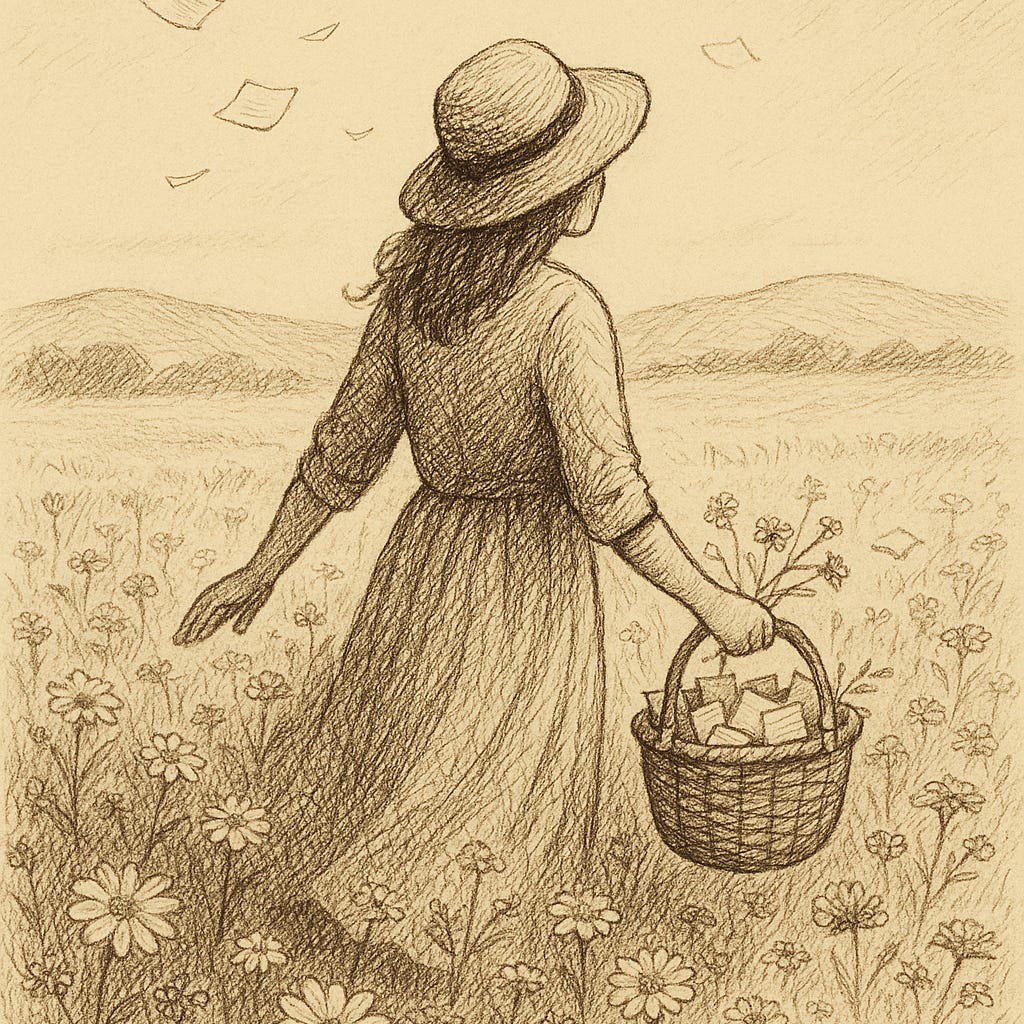
It started when I stumbled on a collection in Sublime called “Quote Basket.”
Something about that name just hit me.
Like someone walking through a field of wildflowers, picking whatever catches her eye and tucking it into a woven basket to take home.
No categories.
No rules.
Just beauty gathered as it appears.
Enter Austin Kleon and His Commonplace Diary
And right as I was savoring that idea, I happened to bump into an article Austin Kleon wrote (thanks, Sublime) about his Commonplace Diary—his own way of collecting quotes. And it sent me down a path I’m still wandering.
Kleon keeps a giant digital note on his phone called QUOTES. Every line that moves him gets tossed in there.
Most people would stop there. A searchable list is convenient, quick, efficient.
But Kleon does something different.
The Two-Pass Method: Collection and Consecration

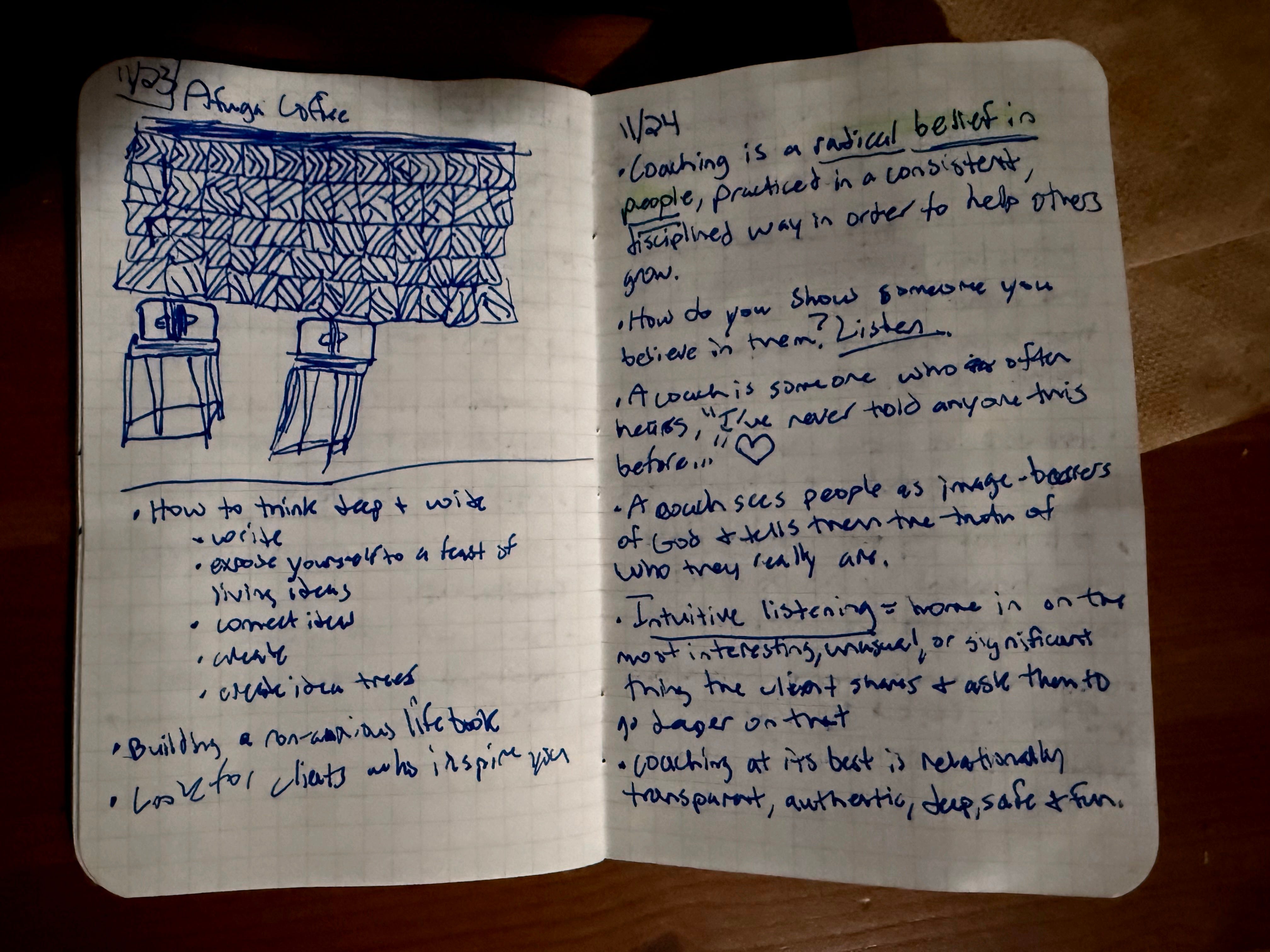
Each day, he returns to his digital quote pile, chooses one line, and copies it by hand into a physical notebook.
Two encounters with the same sentence:
Pass one: collecting the spark.
Pass two: absorbing it, inhabiting it.
Writing by hand slows the moment down. The quote moves through your eyes first… and then through your body.
It becomes less like “content I saved” and more like “truth I’m learning.”
This fascinated me.
Organized by Date, Not by Topic
Here’s what surprised me most:
Kleon doesn’t organize his quotes by theme or category.
Just by date.
Which means when he flips through his notebook, he’s not scrolling a topic…
he’s walking through a season.
Different moods.
Different needs.
Different hungers.
Different prayers.
A line on creativity might sit next to a line on grief. A psalm might share a page with a sentence from Shakespeare or a YouTube interview.
Those friction points—the “these don’t belong together” moments—are where fresh insights spark.
Seeing the Weather of Your Soul
This date-based approach reveals things that categories can’t:
What you cared about in October.
Which authors kept showing up in summer.
The ideas you leaned on during a tough winter.
The kinds of beauty you noticed when life felt bright.
It reminds me of photography.
When fall comes, my camera shifts from sunrises to leaves without me realizing it.
My attention tilts.
My lens changes.
My heart starts noticing different things.
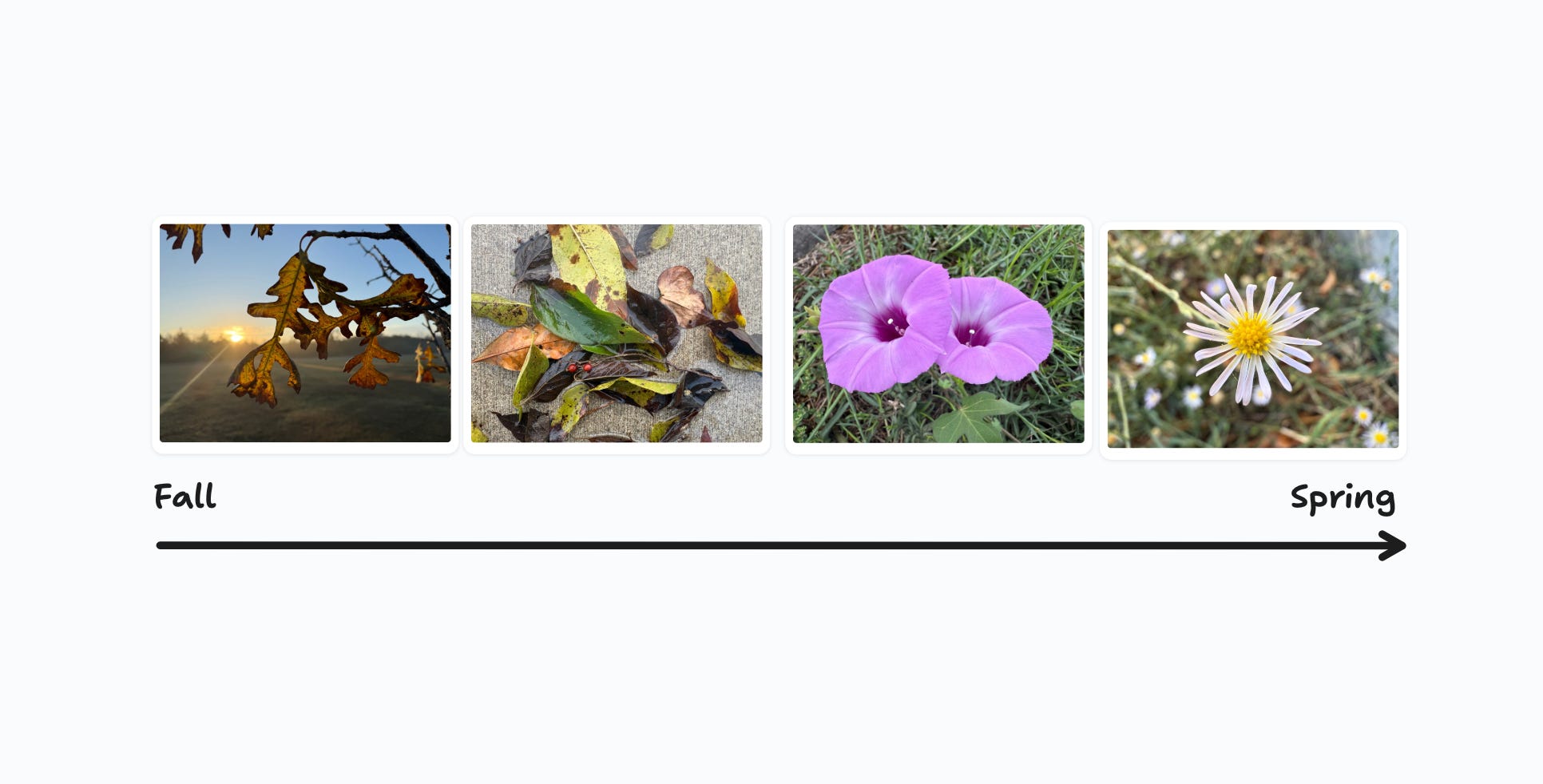
Quotes work the same way.
They follow the weather of your soul.
They tell you what was blooming in you at the time.
Emerson’s Trumpet Blast
Then Ralph Waldo Emerson shows up like a friend who’s been listening the whole time:
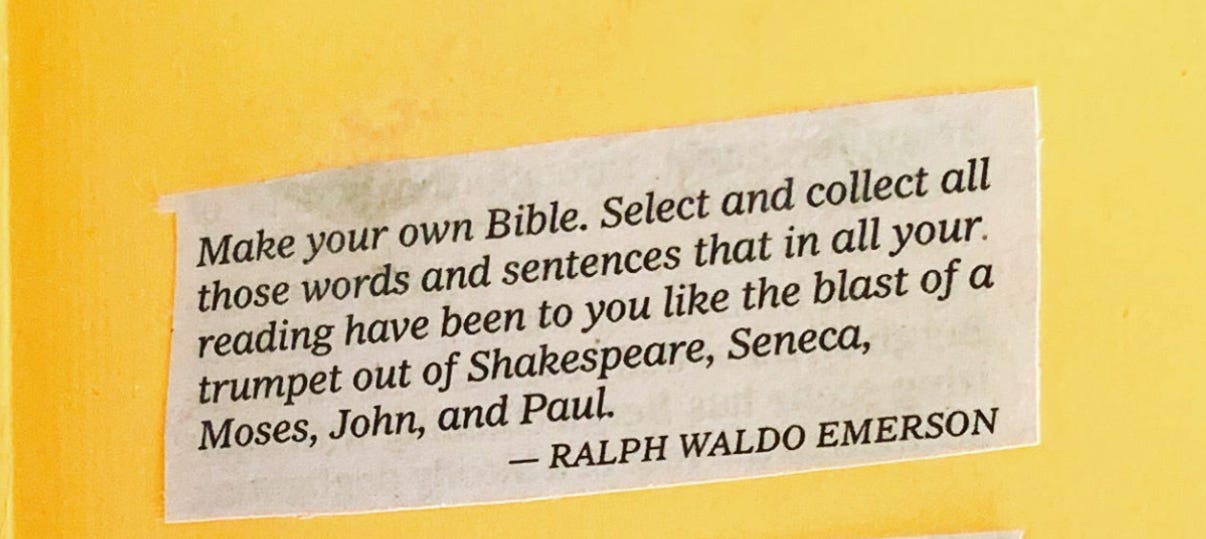
That’s what a Quote Basket really is:
your personal canon of trumpet blasts.
The lines that startled you awake.
The sentences that tuned your desires.
The words that pointed you toward hope, clarity, courage, or God.
Not because they’re famous—
but because they found you.
The Practice I Didn’t Realize I Was Already Doing
The more I sat with Kleon’s two-pass method—gather digitally, then copy by hand—the more I realized:
I’ve actually done something like this before.
Last year, I wanted Scripture to stick.
Not skimmed.
Not highlighted and forgotten.
But carved into me. Stored. Ready.
So I bought a pack of Field Notes and a pocket-sized organizer.
It became my wallet, my daily companion, my intellectual tool belt.
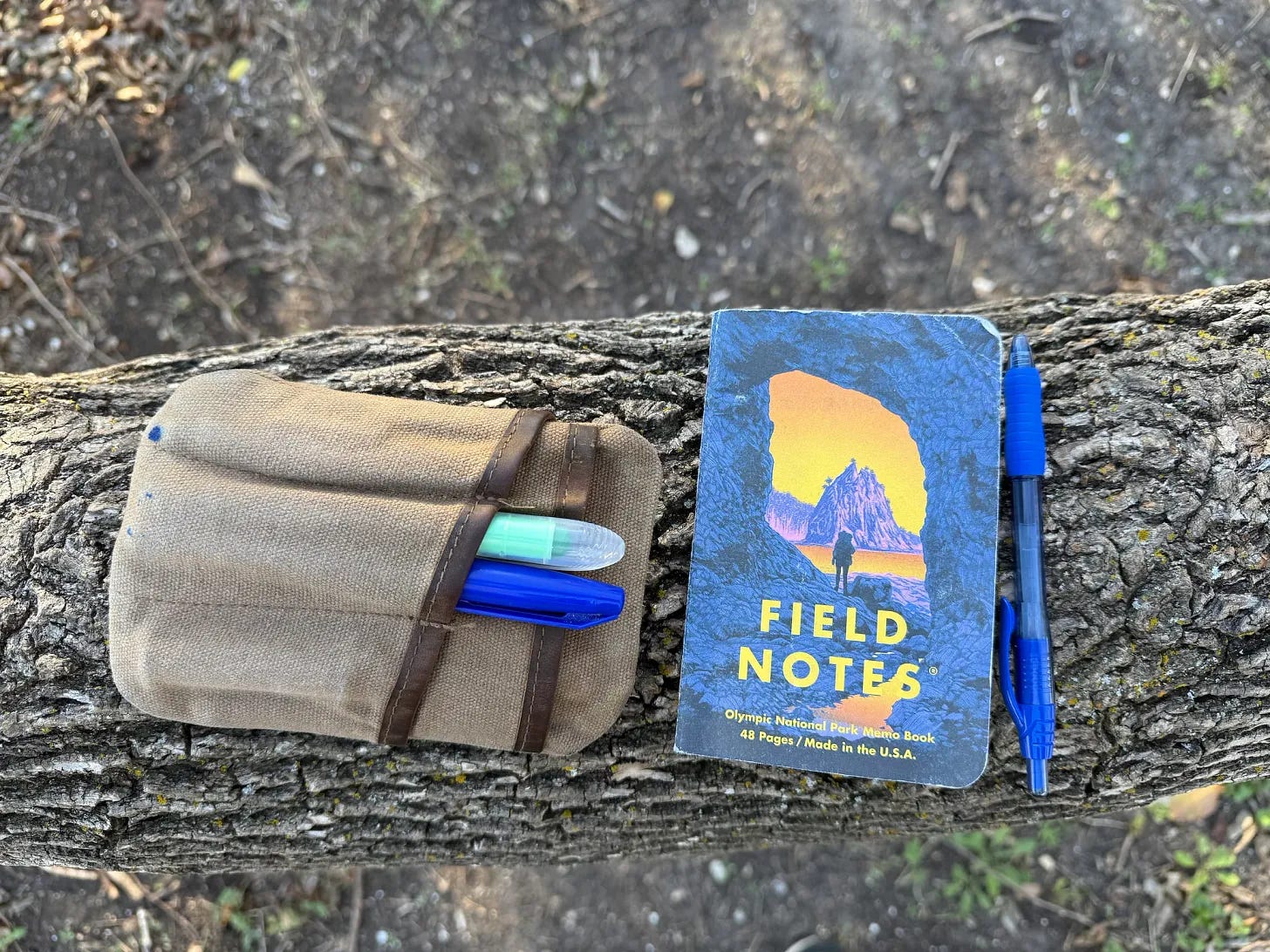
And I made a simple rule:
Write down one thing a day. Just one.
Sometimes it came from my digital notes—a verse I saved, a line I underlined, a lyric I couldn’t shake.
Sometimes it came from something I noticed while walking.
I even found a spot on my trail: a bendy tree, just flat enough and high enough to write on. The first time I stopped there, it was by accident.
Now, I stop because that tree has become a cue:
Pause. Pay attention. Capture what matters.

And just like Kleon, I wasn’t writing new ideas.
I was writing the things I wanted buried deep—
the things worth carrying.
A verse.
A prayer.
A quote with weight to it.
Just one thing. It had to count.
Looking back, I realize this was my version of the two-pass method:
gathering something in the wild…
then anchoring it in my body through ink and paper.
One day, my kids might find these notebooks.
Maybe they’ll see what shaped me.
Maybe they’ll catch a glimpse of who I was trying to become.
And that’s the thing Kleon gets right:
when you copy something by hand, it isn’t just stored—
it becomes part of you.
It’s like each quote gets to live twice.
Thank you for sharing! I didn't know he did this and might pick up the practice.
Tangent....I couldn't help but think of the picture book Apple Tree Christmas by Trinka Hakes Noble when I saw your picture and read that you like to stop to write at the tree. Have you read it? If not, you might enjoy the read. There is a writing tree featured in the book and yours reminded me of it. Happy to have been connected to you.