
Become an idea wrangler
3 ways to deepen your note-taking experience

Hey deep & wide thinker,
If you’ve struggled with capturing and managing your ideas, you’re not alone.
Ideas often seem fleeting, like wild horses running through an open field. They appear suddenly, full of energy, but if you don’t act quickly, they vanish.
Here’s the truth: ideas aren’t meant to manage themselves. They need someone to guide them.
That’s where you come in—not as an idea collector, but as an idea wrangler (hat tip to Allen Arnold for this brilliant idea)
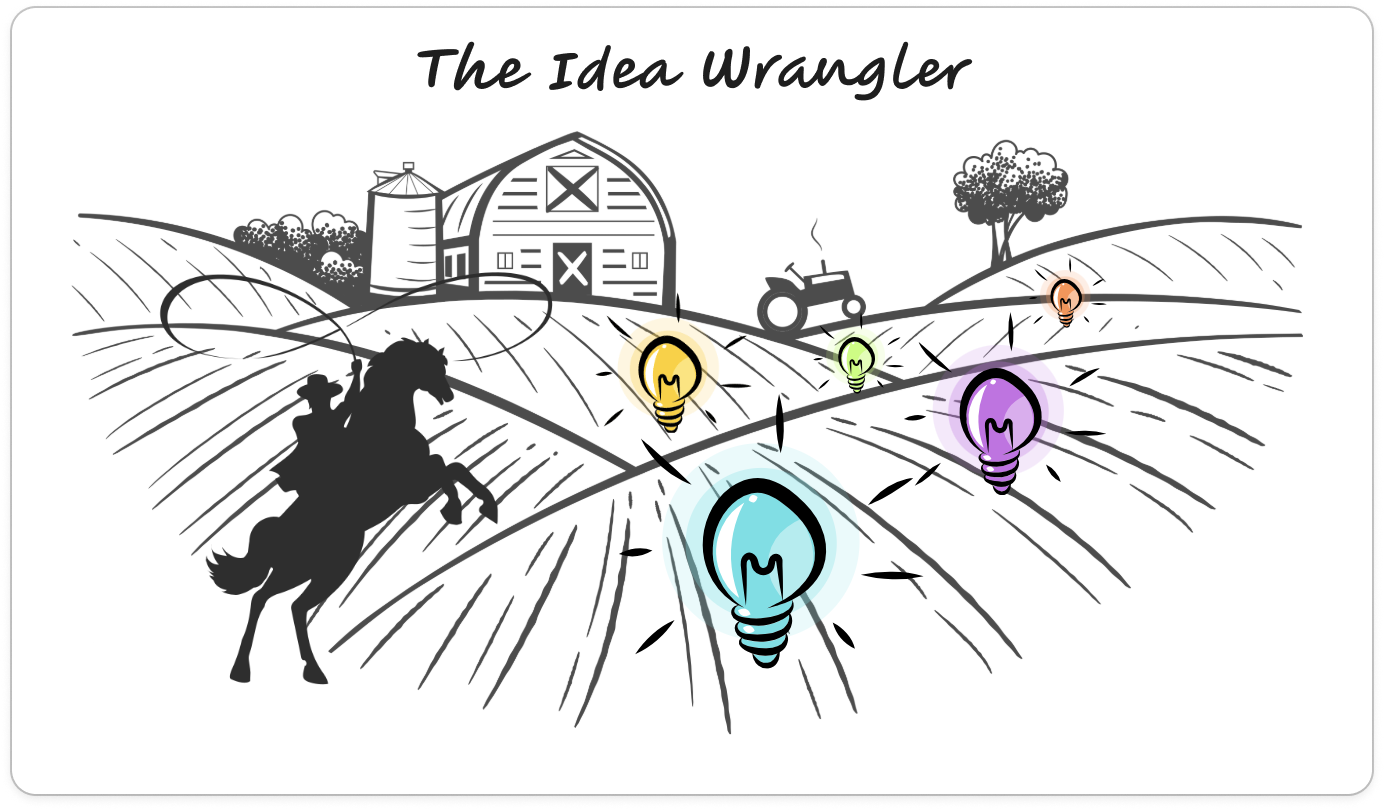
Poet Ruth Stone offers a beautiful metaphor for this process.
She described how, while working in the fields, poems would come to her like “a thunderous train of air barreling down across the landscape.”
If she didn’t stop everything to capture them, the words would continue on, looking for another poet to claim them.
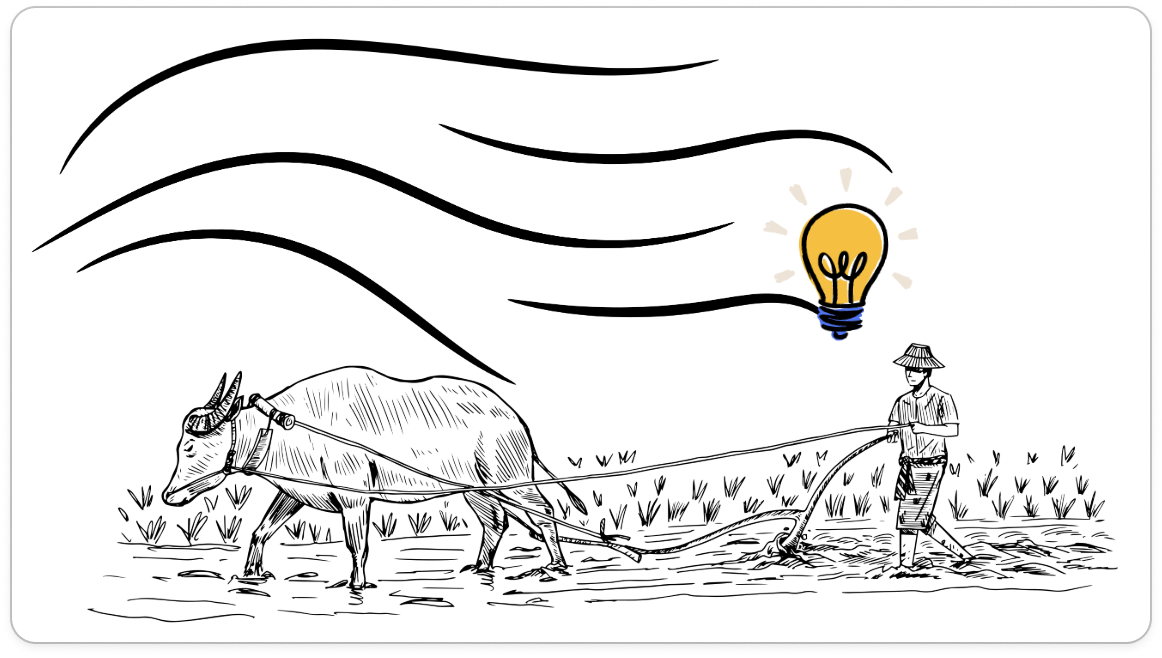
Think about that for a moment...
What if the random ideas you encounter are not random at all? What if they’re waiting for someone—you—to notice them, grab hold of them, and give them form?
Guide your ideas
To wrangle something means to herd, guide, and care for it. One synonym for wrangle is shepherd. Just as a shepherd leads their flock to new pastures, you can lead your ideas to new places.
And just as a shepherd observes patterns in their flock, you’ll notice patterns in your ideas if you return to them consistently.
For me, this often happens with Bible verses. I’ll sit with a verse one morning, revisit it the next, and something entirely new will stand out. Sometimes, one insight leads me to a completely different verse, opening up connections I hadn’t noticed before. The more time I spend, the more I uncover.
The same principle applies to any idea. Spend enough time with it, and it will reveal new layers, new connections, and even new directions you hadn’t considered before.

What does this look like in practice?
Revisit Ideas Regularly
Don’t let an idea be a one-and-done moment. Return to it multiple times—daily, if possible. Over time, patterns and connections will emerge.
Write Something down
Every time you revisit an idea, write something down. It doesn’t have to be profound. A few words or sentences can capture your evolving thoughts and open the door for further exploration.
Tip: I’ll often pin notes I’m thinking about so I can easily reference them.
Parse It Out
Take a word or concept within the idea and dig deeper. Look up its definition, synonyms, or even antonyms. Rewrite the idea using these variations. You’ll often find new perspectives or applications you hadn’t considered. While spending time with the idea wrangler concept, I found the word “Shepherd” which opened up new connections for me.
So the next time an idea comes barreling down at you like Ruth Stone’s thunderous train of air, don’t let it pass you by.
Wrangle it. Guide it.
And who knows? You might just lead it somewhere extraordinary.

Keep thinking deep & wide,
Greg
Great thoughts, Greg!
Like you, I always record ideas when they pop into my mind. Because I know they can disappear just as quickly. My tool of choice: Evernote using Siri to dictate ideas (or I type them in, of course). I realize that ideas can occur any time, anywhere. And I'm committed to capturing them.
You mentioned revisiting ideas regularly. That's powerful. Because each time you do so, you're in a slightly different mental state. That enables you to brainstorm add-on ideas or to see new connections that you missed earlier. Iterative nurturing can turn half-formed ideas into full-fledged, valuable ones.
I'm also a big believer in the role of the subconscious mind in creativity. Feed it a wide variety of inputs. It atomizes them, recombines them and then serves them up to us as hunches or "a-ha" moments.
One of the strengths of the subconscious is its incredible powers of association. If I say the word "red" to you, dozens of red things will pop into your mind. To cultivate more and better ideas using the power of association, I use mind maps. In a recent survey, readers of my blog say that mind mapping tools increase their creativity by 50%!
Loved this post, and the ideas you shared, Greg! I’ve found the same thing in regards to Bible verses — the Word truly is “living and active”!
I believe this concept from Ruth Stone was mentioned by Liz Gilbert in her TED talk on creativity. I don’t recall whether she mentioned Ruth by name, but the image of the ideas coming hurtling through, and needing to grab them before they’re gone has always stuck with me.