
Distorted AirPods, Distorted Ideas

The other day, I accidentally left my AirPods in my pocket before tossing my pants in the washing machine.
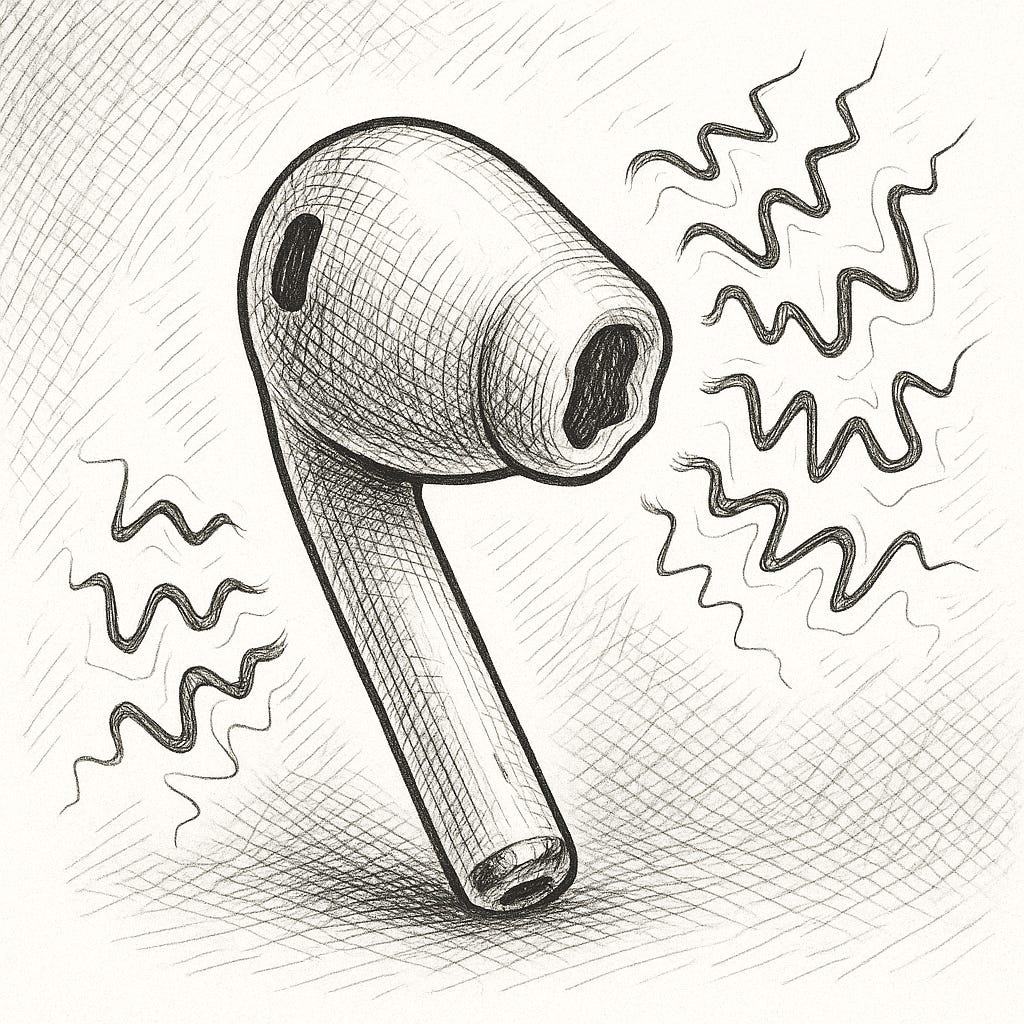
Funny thing is, the earbud that had always been broken seemed… less broken. And the one I depended on started sounding warped. Now, if I crank the volume all the way up, I can sort of hear—but it’s fuzzy, distorted, not quite the full clarity I know is possible.
That got me thinking: ideas work the same way.
More Volume, Less Clarity
When my AirPods broke, I thought turning them up louder would solve the problem. Instead, it made the distortion louder.
We do this with ideas, too. We think the answer to feeling unclear is more input. More podcasts, more articles, more books, more voices in the room. But louder doesn’t equal clearer.
Clarity often arrives when we reduce the input, not when we increase it.
The Shepherd’s Ear
A shepherd doesn’t need a blaring loudspeaker to know where his sheep are. He develops an ear for the subtle sounds—the faint bleat on the edge of the pasture, the quiet jingle of a bell, the stillness that means something’s not right.
That kind of listening requires less noise, not more.
As idea shepherds, the same is true: our thoughts won’t be stewarded well if we drown them out with endless input. Instead, we need to attune our ears. Sometimes that means turning down the volume of information so we can hear the melody of a single idea.
Field Practice
This week, try this simple practice:
Lower the volume. Pick one source of input you normally crank up (email, news, podcasts, scrolling) and turn it down for a day.
Cup your ear. Notice what faint idea, insight, or question emerges beneath the quiet.
Shepherd it. Write it down, walk with it, or share it in conversation.
You might be surprised: clarity wasn’t hiding in more volume—it was waiting in less.
A Bonus Tool
One of the ways I lower the volume without losing clarity is by using AI as a conversation partner. It’s not about asking for more noise, but about shaping what I’ve already noticed.
That’s why I put together a short guide called Thinking with AI—it shows how to use tools like ChatGPT not to overwhelm yourself with more input, but to reduce distortion and hear your own ideas more clearly.