
Knowledge Gardens Don’t Grow on Interstates
Shift from drive-through learning to slow cultivation

I heard a line recently that hit me hard:
“Treat the Bible more like a school zone and less like an interstate.” — Myron Golden
Even if you swap “Bible” with any kind of material worth engaging—books, notes, conversations, your own daily observations—the point still lands.
On the interstate, you fly by at 70 mph. Efficient, fast, forgettable. In a school zone? You slow down. You’re alert. You notice the crossing guard, the little details, the life unfolding right in front of you.
That’s the kind of attention our ideas deserve.
It’s like visiting a new town. You roll the windows down, catch the mural on the brick wall, the tucked-away coffee shop, the laughter of kids riding bikes. Everything feels alive when you’re paying attention.
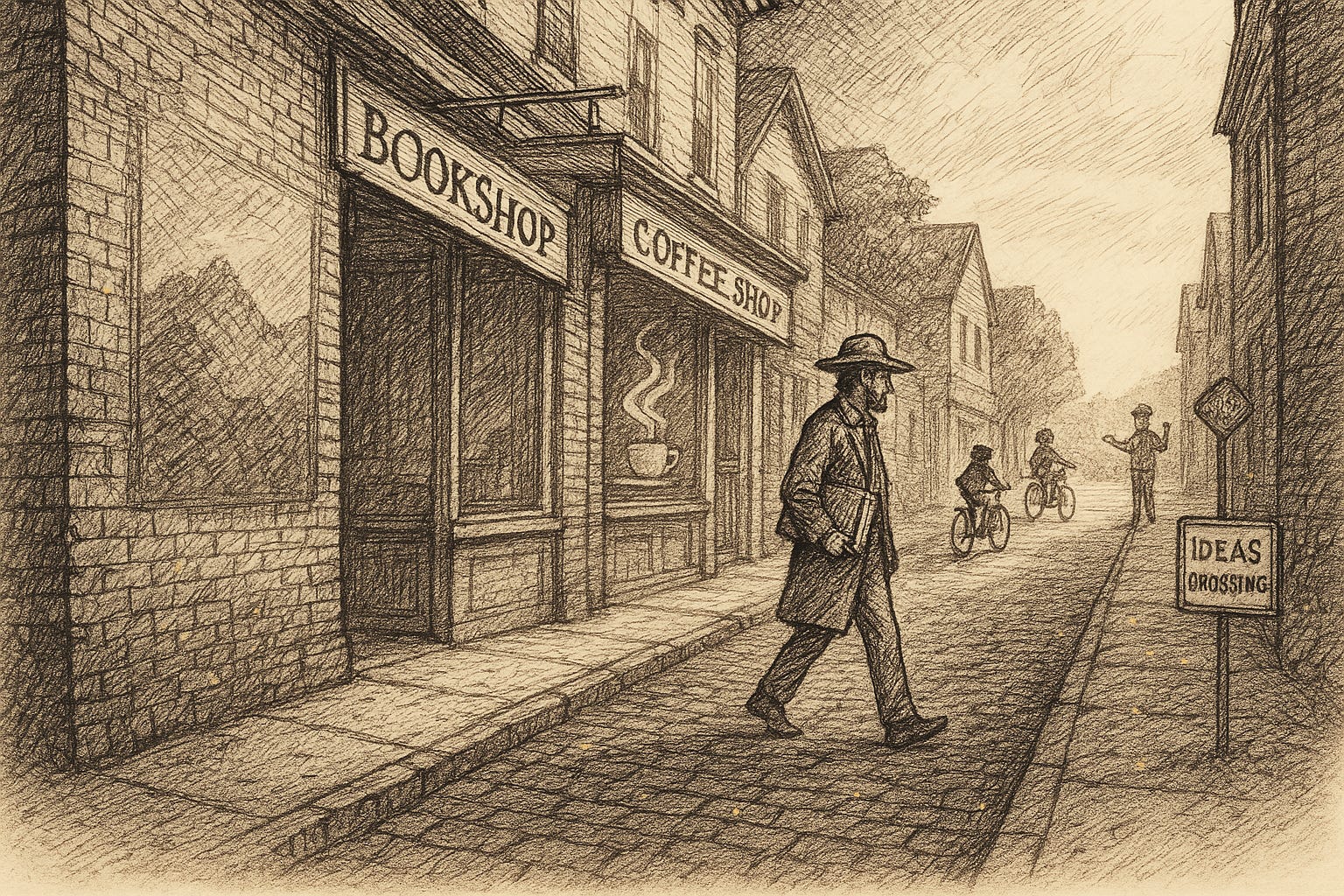
For me, “school zoning” is a mindset:
If I come at something like I’ve already seen this, I’ll always miss the gold. But if I approach it with, What’s new here for me?—everything changes. Suddenly the ordinary text, the familiar quote, even the same note I’ve read ten times, offers something fresh.
This is what the PKM crowd calls deep reading, knowledge gardening, or even progressive summarization. But I like thinking of it as school zone speed: slowing down so the small, significant things can cross in front of you without being missed.
And here’s the paradox: sometimes the slower you go, the faster you arrive.
Shepherd’s Pause:
What would shift if you brought the mindset of “What’s new here for me?” into your next book, note, or conversation?
If you’ve been wanting a practical way to steward your ideas…
not just consume them, but actually write, shape, and share them—my friends Dickie and Cole run something called Ship 30 for 30. It’s a 30-day online writing cohort with a community of thinkers and builders. I’ve taken it myself, and it completely changed how I capture and develop my ideas.