
What leaf do you carry?
On finding the jagged edge that belongs to you

I stopped on a walk the other day and just stared at a leaf.
An elm leaf. And I knew immediately — before I even had to think about it — exactly what it was. Dark green. Medium-sized. And all around the edges, these little teeth. Sharp, jagged. Unmistakable.
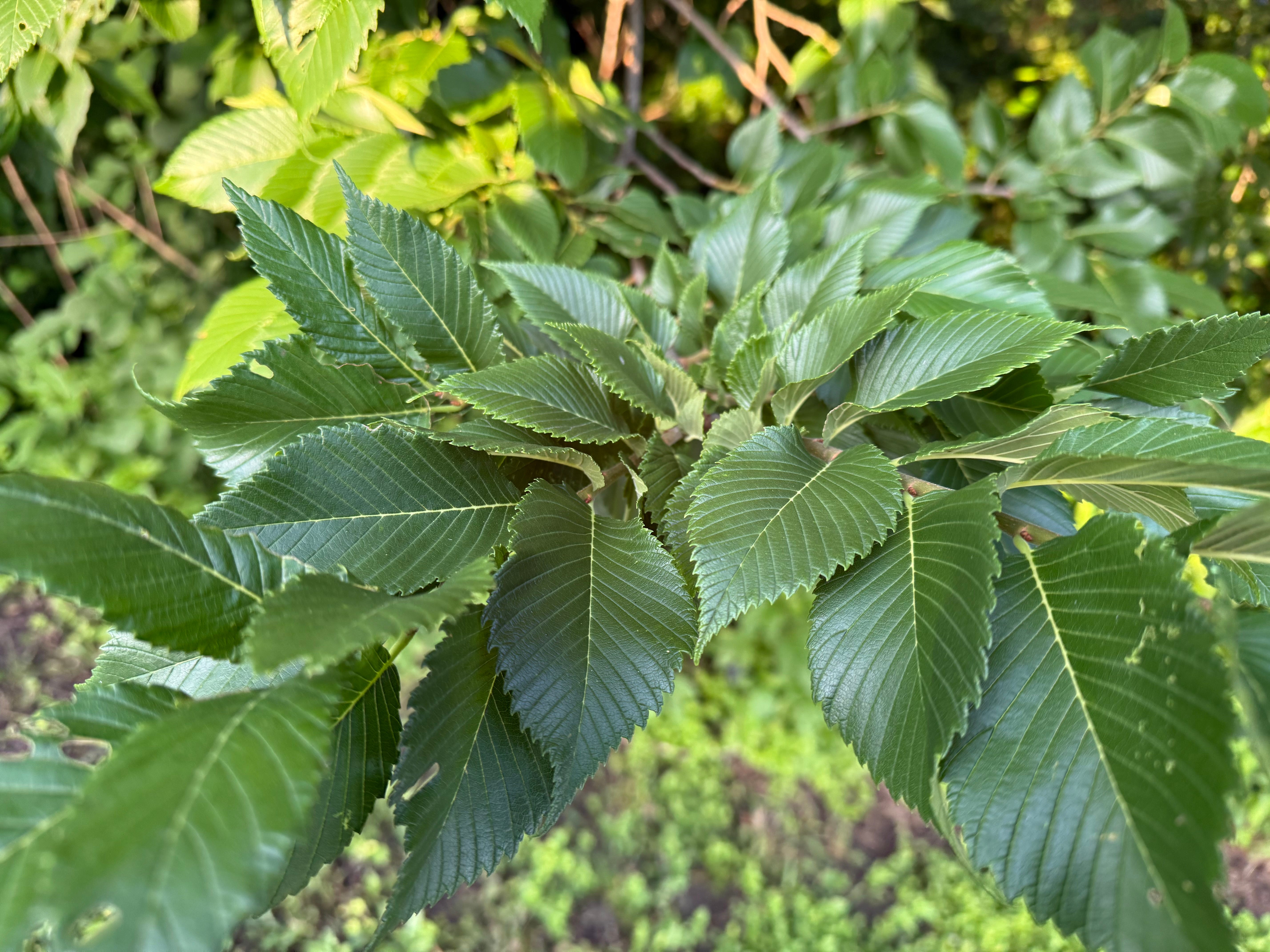
You just know.
Now here’s where it got interesting for me.
I started thinking about my creative work. And I had this question I couldn’t shake — do I have an elm leaf? Like, when something comes out of me — a post, a podcast episode, a song — can you look at it and say, “Yeah. That’s Greg’s.”
Rich Litvin calls them spiky points. In writing, they call it voice. In painting maybe it’s style. With guitar it’s your tone. But it’s all the same question. What’s the jagged edge that belongs to you?
And I realized — the question isn’t really how do I develop that. The question is what is already so true of me that I can’t NOT put it in everything I make?
Because the elm isn’t sitting there working on its jaggedness. It’s not in a masterclass on leaf design. It’s just going deeper into being an elm. The roots go down. The branch reaches out. And the leaf — the leaf just is what it is.
A quick note before you go.
That reflection you just read? It started on a walk. I stopped at an elm tree, stared at a leaf, and just... followed the thought.
That’s it. That’s the whole method.
But I know that’s easier said than done. I asked some of you recently what gets in the way when you want to think deeply.
Nearly half of you said the biggest thing is having the time — but your mind just won’t settle.
I felt that.
That’s actually why I built Ember. Not a note-taking app. Not a productivity system. Just a quiet place to think one idea at a time — until the thought goes somewhere you didn’t expect.
The elm leaf started there.
If you want to try it, I’d love to have you.
You would probably appreciate a book I’m in the middle of right now – “Several short sentences about writing” by Verlyn Klinkenborg (2013). It’s an odd book, in essence one huge chapter (about 140 pages) followed by a sub-section on prose examples and another sub-section with sentences that need more thinking to gain clarity. In short blocks of (mostly) short sentences, Klinkenborg digs deep under and behind the writing “rules” and advice that bind our minds more than liberate them. He talks about the art of noticing, which is what you do so often in your posts here.
Klinkenborg lives on a farm in upstate New York, and has written a couple books of meditations on rural life, about the domestic animals and the wild ones that occupy the land, the seasons, how sunlight and moonlight shift, the effect of wind and weather on the place and on his interpretation of his environment. He has written other books, too, which I have not yet come across.