
Why Shallow Ideas Don’t Last
And How to Go Deeper (lessons from whale songs)

Have you ever wondered why some ideas stick with you for years while others fade almost instantly?
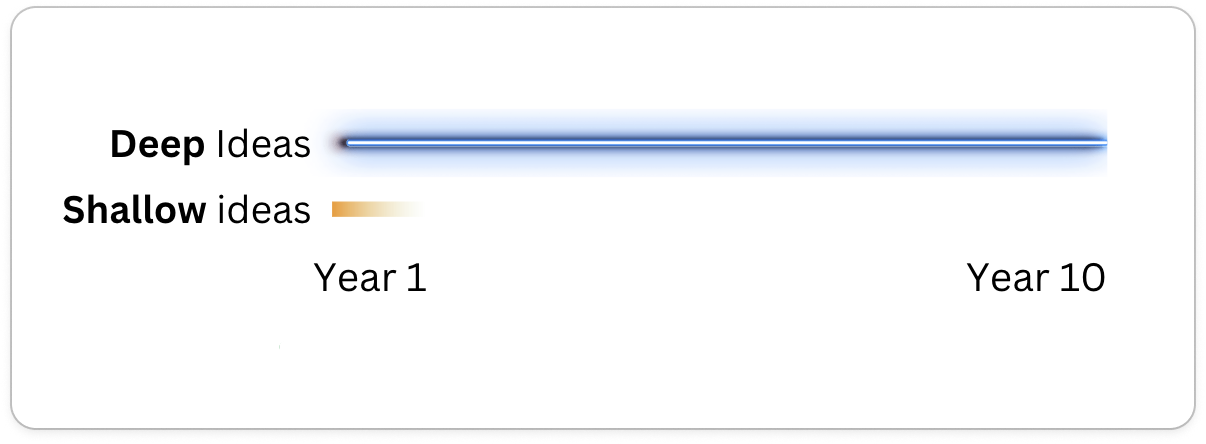
Depth is often the difference. Deep ideas resonate, while shallow ones barely leave a ripple. A deep idea has been worked out and worked on. Sometimes for years.
Prefer to watch or listen? Catch it here!
The Sound Channel
Recently I discovered whales have a remarkable built-in ability for long-distance communication.
Consider this: A humpback whale singing in the Caribbean can be heard by a fellow whale off the west coast of Ireland, more than 4,000 miles away.
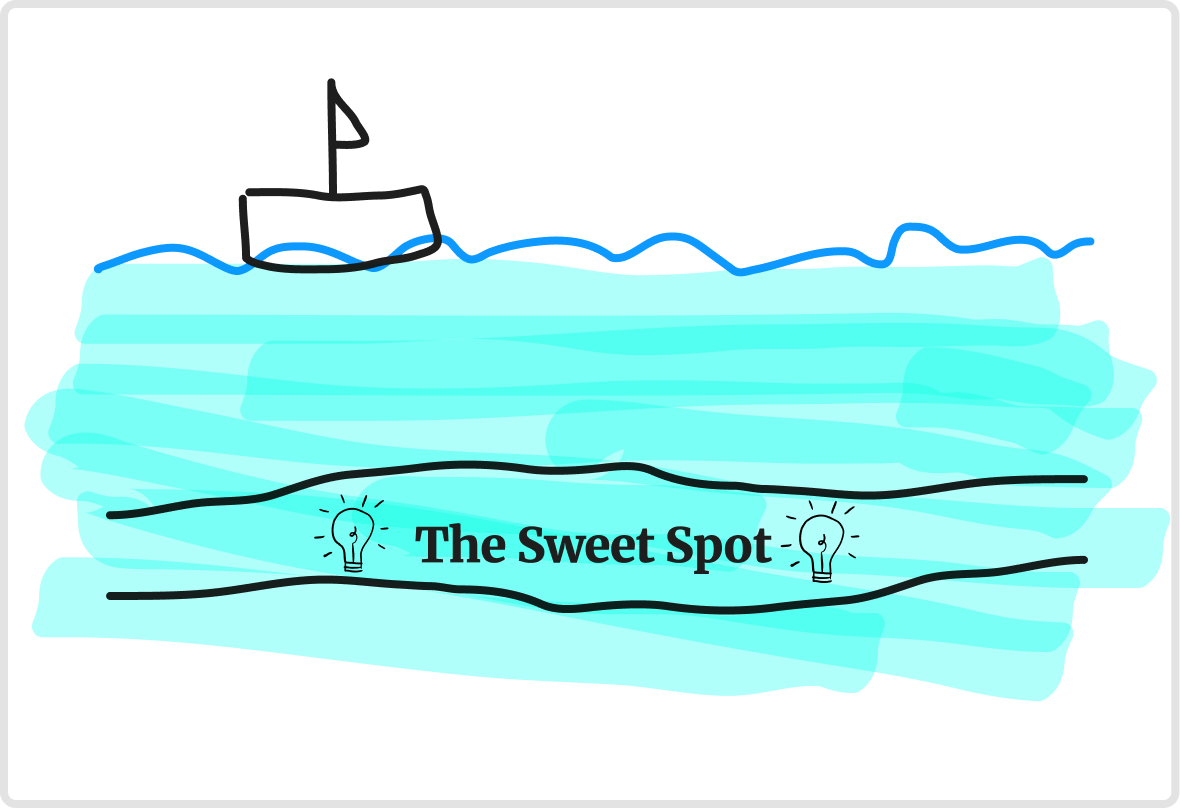
How is this possible? According to NOAA’s National Ocean Service, whale sounds can travel extraordinary distances thanks to...The Sound Channel.
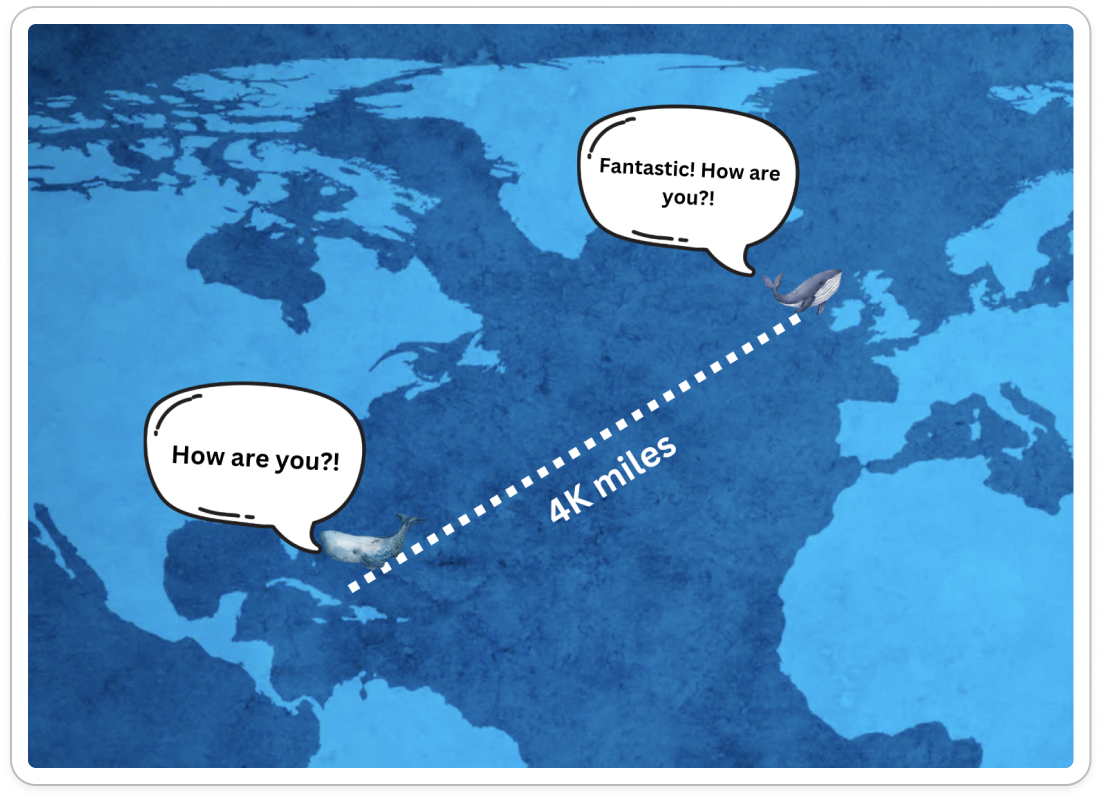
Here’s what’s interesting: calls made near the surface dissipate quickly. However, if whales’ sounds enter the sound channel, they travel much farther.
Depth Increases Reach
This miracle is fascinating because it illustrates how depth increases reach.
It’s the same with ideas. In my experience, the deeper I go in shaping ideas within my Zettelkasten, the further they reach—in terms of connections, clarity, and their potential impact.
Some of the most beautiful, peculiar and unique creatures are found in the deepest waters. It’s true of ideas as well. A deep thought, well-communicated, has the potential to resonate deeply in someone’s mind and heart.
Depth Takes Time
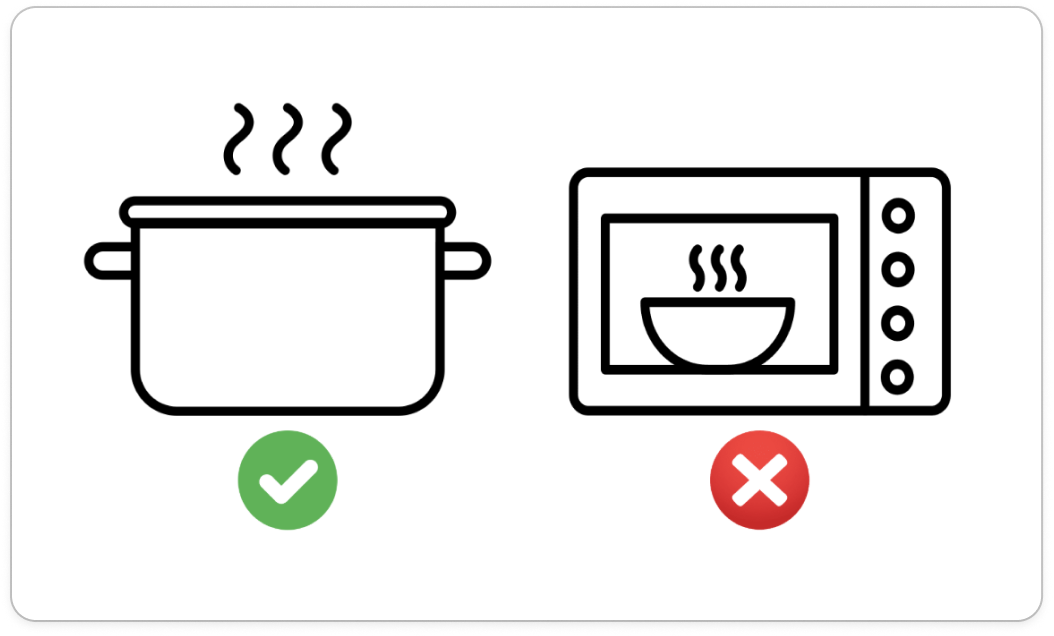
Deep ideas aren’t cooked in a microwave. They’re created in a pot simmering on low heat over time.
As Allen Arnold says, “Easy and best are rarely on the same path.”
Your best ideas won’t come quickly, and that’s okay. Sometimes, I’ll stay immersed in a thought for days, finding new insights after a good night’s sleep. Depth takes patience.
Practice Linguistic Exploration
Words are a powerful gateway to depth.
Start by diving into specific words within the idea. Look up definitions and synonyms, then insert them into your sentences to explore new angles.
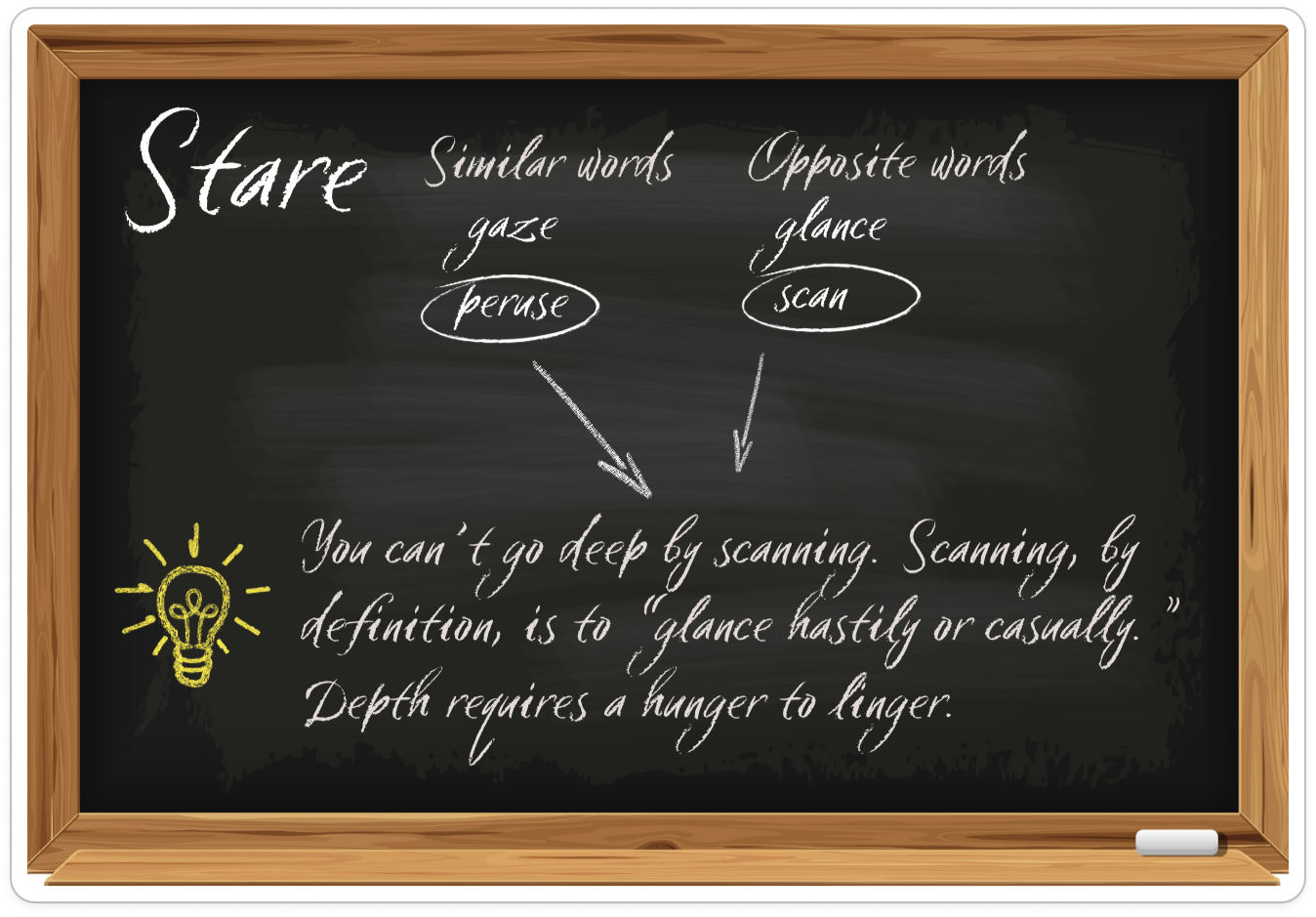
Let’s look at the word “stare” in context of cultivating deep ideas. A synonym might be “gaze” or “peruse,” while an antonym could be “glance” or “scan.” This contrast reveals a valuable insight: you can’t go deep by scanning. Scanning, by definition, is to “glance hastily or casually.” Depth requires a hunger to linger.
Notice how I included the definition of scanning. This was synonym of the main word we were diving into. I call this “following word trails”. You do this by exploring definitions/synonyms of related words. Each step adds layers of nuance and clarity to your understanding.
Finding the Sweet Spot
Just as whales use the sound channel to amplify their reach, we can find intellectual “sweet spots” where our ideas gain clarity, resonance, and longevity.
By taking the time to dive deep and explore, we set our ideas up for greater connection and impact.
The next time you’re working on an idea, ask yourself: Are you staying shallow, or are you diving deep enough to find the sound channel? Depth makes all the difference.
Nice post! It reminds me of Ryan holiday and how obstacle is the way started as one 4x6 notecard, then expanded to a whole collection as the idea slowly started picking up, mature over years and years, until it was finally time